

Dear Colleagues,
Updates from the Team
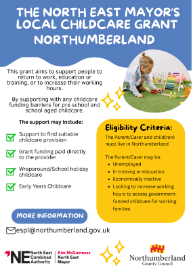
Childcare Grant
Does Your Current Workforce Reflect the Skills and Experience Needed for the Future?
September is often a time when of recruitment for some settings. Please see attached. If you are looking to recruit, you may wish to reflect on the following:
Do you consciously consider the strengths, knowledge, interests and talents already within your team and how these are deployed effectively?
Do you have a workforce strategy that sets out how skills and talents are shared across the team or generations to support the professional development of others?
Do you consider how you attract and nurturing the next generation of practitioners and the skills they can bring, whether through apprenticeships, work experience, student placements, volunteering opportunities or career pathways?
What more could you do to create a sustainable talent pipeline that builds future leaders, retains valuable expertise and ensures high-quality provision for children and families for years to come?
Reflection Prompt:
Do you strategically consider succession planning?
“If key members of your team moved on tomorrow, what knowledge, skills or leadership would be lost and what are you doing today to develop the workforce of tomorrow?”
Early Years Qualifications
NCC Skills offer a flexible training programme, whether you are looking for an Apprentice or upskilling to Level 2 or Level 3. They can also offer taster sessions in early years to inform career choice. Please see flyers attached.
NCASP Threshold of Need
NCASP Thresholds of Need document has recently been updated. This interim refresh brings our local guidance in line with the new Family Help system and recent changes in Working Together 2026.
Key changes:
- Targeted Early Help and Child in Need are now combined under Family Help.
- Terminology and language has been updated and “step up/step down” removed.
- Links to MACPTs and Family Networks are clearer.
- Statutory references, referral routes and consent guidance have been updated.
A fuller review will follow by March 2027, taking account of wider reforms from the Families First Partnership Programme Guide, the Children’s Wellbeing and Schools Act 2026, and learning from local audits and reviews.
Please use the updated Thresholds of Need document to help with decision‑making, conversations with families, and multi‑agency discussions. It’s a useful tool for everyone working with children and young people.
EYFS – September 2026
The DfE have now published the updated EYFS documents which will come into force on the 1st September 2026.
To familiarise yourself with the changes please find both the Childminder and Group Provider documents here.
Updates from Partners
Reminder: early education partnerships – applications close on Friday 17 July
Applications are currently open for early years providers and schools to apply for the early education partnership funding opportunity.
Early education partnerships will strengthen relationships between early years providers and schools and support children’s transition to reception – so children feel confident, prepared and supported when they start school, and schools are ready to meet each child’s needs.
Early years providers and schools can connect with each other in their local area to form a partnership and apply for a development grant to help them establish themselves and develop their plans.
Partnerships will need to submit their application by Friday 17 July 2026.
For further information, including eligibility and how to apply, see our guidance on early education partnerships.
Working or volunteering in regulated activity with children
Due to the Crime and Policing Act 2026, there is a change to regulated activity which will come into force in September 2026.
The change affects settings which rely on volunteers. This is because of the removal of the supervision exemption. From 1 September 2026, all volunteers engaging in regulated activity will need an enhanced DBS check with children’s barred list information. This also applied to holiday clubs and wraparound care.
Providers should read the full guidance here - Regulated activity: removal of the supervision exemption (comes into force 1 September 2026) – GOV.UK
Priority Services Register (PSR) – support for families and staff
The Priority Services Register (PSR) is a free UK-wide service that provides additional advice and support for eligible households, including extra assistance and communications during interruptions to electricity, gas or water supplies.
Parents and carers with children under five can register, as can people who are reliant on medical equipment, have a disability, a chronic illness, a mental health condition, or other circumstances that mean they may need extra support.
Eligibility is not limited to these groups. If anyone in a household meets the vulnerability criteria – even on a temporary basis – they may be eligible to join the PSR. Additional eligibility criteria are available on the PSR website.
The PSR helps utility companies identify
households that may need extra support, including priority updates during supply interruptions, tailored communications, and access to additional assistance where needed.
Parents, carers and members of the early years workforce can register themselves directly and find out more at The PSR – The Priority Services Register (PSR)
National Professional Qualification (NPQ) review
The department is engaging with stakeholders through a range of forums to ensure that a wide range of views are considered as part of the wider NPQ Review process.
DfE are keen to hear directly from Early Years professionals to gather insights and feedback on the NPQEYL to help ensure that any changes continue to meet the professional development needs of teachers and leaders.
DfE would like to hear your thoughts on the following:
What should the primary focus of NPQEYL be?
Who should the target audience be? How can it be better targeted to participants’ role, setting and stage of leadership?
What are the priority areas for content changes in the NPQEYL framework? Could anything be removed?
What are the perceived gaps?
DfE recognise that this is a busy time for teachers and leaders. However, if you are willing to provide written feedback to those questions and/or take part in a small roundtable discussion, which will be held on Thursday 16 July at 4pm, do respond via the following form: National Professional Qualification (NPQ) Review - NPQEYL – Fill in form by Monday 13 July 2026. The form will remain open for written responses.
Northern Lights Stronger Practice Hub
We are delighted to offer two online webinars this August with Helen Battelley, delivered via Zoom.
These sessions provide practical, research-informed ideas that can be implemented immediately in your setting.
Thursday 6th August | 6:00pm – 7:30pm
Baby Music and Sensory Play
Ignite early development through sound, rhythm, and sensory discovery
This is for Early years practitioners, childminders, nursery staff, and anyone working with babies and toddlers.
Join us for a gentle yet powerful exploration of how music and sensory play can support the earliest stages of infant development. In this engaging webinar, we will uncover how rhythm, sound, texture, and movement nurture brain development, bonding, and communication, laying essential foundations for physical, social, and emotional growth.
This session is perfect for anyone supporting babies and toddlers and looking to enhance their practice through meaningful sensory experiences.
Thursday 13th August | 6:00pm – 7:30pm
Music and Movement in the Early Years
(Recorded interactive online session)
Music and movement are far more than enjoyable activities; they are powerful tools for supporting children’s learning, development, and wellbeing.
Designed for educators working with children aged 3–5 years, this highly interactive webinar explores how songs, rhythm, and purposeful movement can enhance:
- Communication and language development
- Physical development
- Self-regulation
- Social skills
- School readiness
Packed with practical ideas, action songs, and movement activities, this session will provide a toolkit of engaging, low-cost strategies to create joyful, movement-rich learning experiences that help every child flourish.
Book Your Place
To secure your place on either or both webinars, book now by clicking the link below:
👉 https://www.trybooking.com/uk/GSLB
Places may be limited, so we encourage you to book early to avoid disappointment. Once we have final numbers we will send out the zoom link.
Upcoming Events
Save the Dates – Training Directory 2026–2027
We’re pleased to share a preview of Northumberland’s 2026–2027 Training Directory. A wide range of professional development opportunities will be available throughout the year to support practitioners across Early Years settings.
📅 All courses will be available to book via the School Readiness Passport from 1 September.
Please take a look at the attached dates and save them in your diaries. Further details about individual courses and booking information will be available through the School Readiness Passport when bookings open.
We look forward to supporting your continued professional development in the year ahead.
Great British Summer Savings scheme (GBSS) – As targeted and temporary measure to reduce the costs of children’s meals in restaurants, children’s tickets for theatres, concerts and cinemas, as well as tickets for everyone for attractions like soft play, adventure centres, and theme parks. VAT will be slashed on eligible activities to reduce the cost of days out for families over the summer holidays.
As part of this campaign, an attraction finder website has been launched which allows families to type in their postcode and find participating venues near them to make the most of summer savings.
You can find the attraction finder at summersavings.gov.uk.
